| |
|
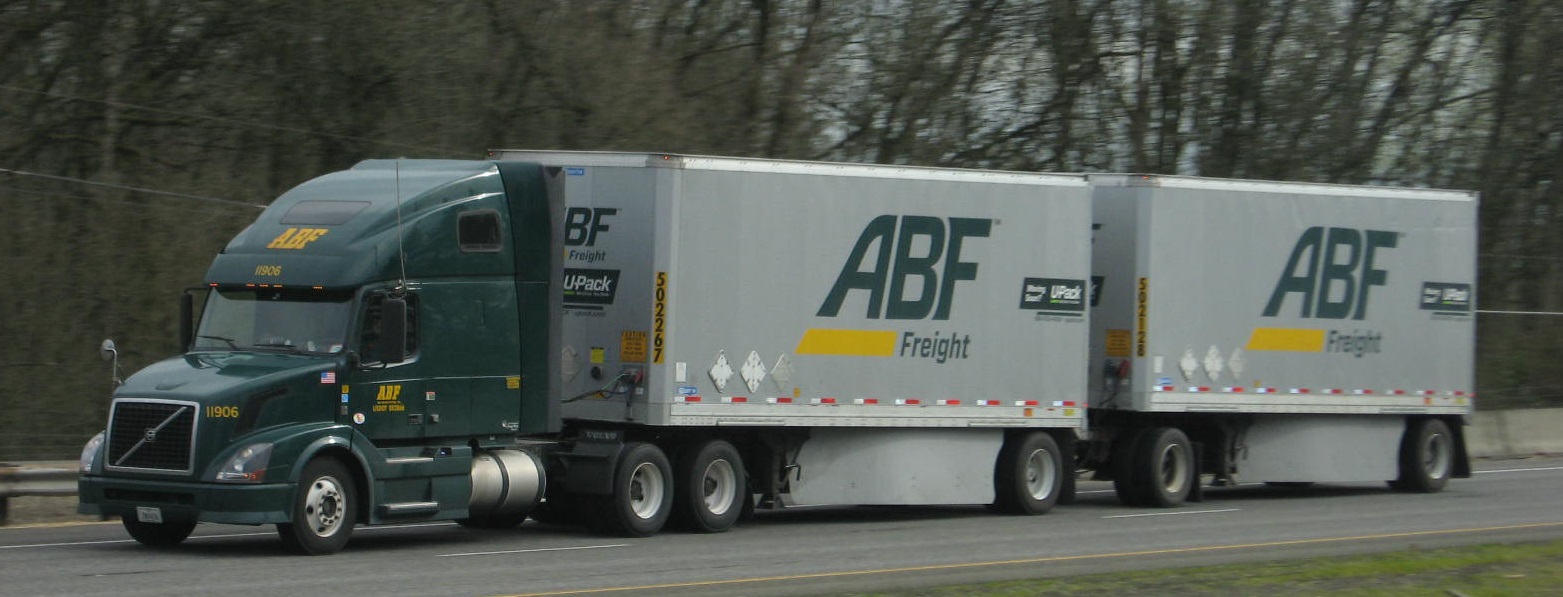
The Teamsters National Freight Industry Negotiating Committee (TNFINC) and ABF Freight System reached a tentative contract agreement, Ernie Soehl, Co-Chairman of the TNFINC, announced today.
No further details will be released until leaders from Teamster local unions that represent ABF members meet in the next two weeks to review the tentative agreement and approve sending it out for a membership ratification vote.
The parties agreed to an extension of the current agreement to allow for the ratification process to take place.
Once the upcoming meeting takes place, the union will release more information.
Visit the Teamsters 492 ABF Negotiations Page for all the updates. Visit the new ABF Teamsters Facebook Page
Text "ABF" to 86466 to receive text message alerts (message and data rates may apply). Or visit www.teamster.org and click on the Freight Division page, then click the “ABF Contract Updates” button. The contract updates page is https://teamster.org/abf-contract-update
|
Download:
 abf_update_march_28_0.pdf abf_update_march_28_0.pdf
|
|
| |
|
Janus vs. Fair Share Fees
The organizations financing the attack on unions’ ability to represent workers
Written By EPI
Over the last decade, a number of cases attacking the rights of public-sector union members have been quietly working their way through the courts and, finally, up to the U.S. Supreme Court.
The most recent of these challenges is Janus v. AFSCME Council 31, which the U.S. Supreme Court will hear on February 26. If the court rules for Janus, it will likely have the most significant impact on workers’ freedom to organize and bargain collectively in 70 years.
Janus is the third case to come before the Supreme Court in five years involving public-sector unions’ ability to collect “fair share” (or “agency”) fees. As this report will show, Janus, and the two fair share cases that preceded it, did not grow from an organic, grassroots challenge to union representation. Rather, the fair share cases are being financed by a small group of foundations with ties to the largest and most powerful corporate lobbies. These organizations and the policymakers they support have succeeded in advancing a policy agenda that weakens the bargaining power of workers. In Janus, these interests have focused their attack on public-sector workers—the workforce with the highest union density.
We examine the core group of organizations financing this litigation. By tracing the origins of these legal challenges, and explaining how the challenges target unions, we show that challenging fair share fees in the courts appears to be part of a broader billionaire-financed agenda to weaken unions and shift power away from ordinary workers.
How fair share fees prevent “free riding”
A union is required to represent a nonmember worker who is mistreated by the employer as the nonmember pursues a costly grievance process, even if it costs the union tens of thousands of dollars. Fair share fees enable the union to charge nonmember workers for the right to access that service if they need it. Without the ability to collect fair share fees, the nonmember worker could access these expensive representation services without having paid a dime.
Workers who choose not to pay union dues also receive the higher wages and benefits that the union negotiates on behalf of its members. Eliminating fair share fees encourages “free riding”: workers paying union dues see coworkers who are paying nothing but getting the same benefits, and they decide to leave the union and stop paying union dues. Public-sector unions have worked for decades to protect the rights of the teachers, nurses, firefighters, police officers, and other public servants that communities depend on. Taking away unions’ ability to collect fair share fees—while they are nonetheless required to provide services and representation to nonmembers—would threaten the very existence of unions by weakening their financial stability.
The possibility that workers could decide not to pay for the union benefits they receive if fair share fees are outlawed does not mean that they do not value these benefits. This proposition was explained in an amici curiae brief to assist the Supreme Court in understanding the free-rider problem at issue in Janus v. AFSCME, which was signed by 36 distinguished economists and professors of economics and law, including three Nobel laureates. The scholars explained that the free-rider problem is a well-established concept in economics. In particular, the brief shows it is widely accepted that if an individual chooses not to pay for a resource provided to him or her for free, it does not mean the individual does not value the resource, and that when individuals who benefit from a resource do not pay for it, the resource will be underprovided.
For example, as the brief points out, a recent union recertification election in Iowa revealed that a majority of workers in the bargaining unit voted in favor of continuing to be represented by the union, even though most of them also opted out of paying fair share fees. A recent change in Iowa state law requires public-sector unions to hold a vote and be recertified before each new contract negotiation, and recertification requires not just a majority of those voting but a majority of all workers covered by the collective-bargaining agreement—union members and nonmembers alike. Since Iowa state law already prohibits fair share fees in public-sector unions, the nonmembers are not required to pay fair share fees, even though they are covered by and benefit from the union’s contract.
In October 2017, the election results for AFSCME Iowa Council 61 revealed that 83 percent of all employees covered by the union’s collective-bargaining agreements voted in favor of recertifying the union.5 Only 15 percent of the workers failed to vote, and only 2 percent voted against the union. Yet a mere 29 percent of workers who are union members pay all of the costs of the union’s collective bargaining—despite the fact that the vast majority of employees agree they benefit from, and affirmatively voted for the union. The remaining 71 percent of the workers in the bargaining unit are free riders, in that they are covered by the union contract but are nonmembers and do not pay any fair share fees because Iowa’s law prohibiting fair share fees allows people to obtain the benefits without paying for them.
Click here to read the full report
|
Download:
Fair_Share_Fees&Janus.pdf
|
|
| |
|
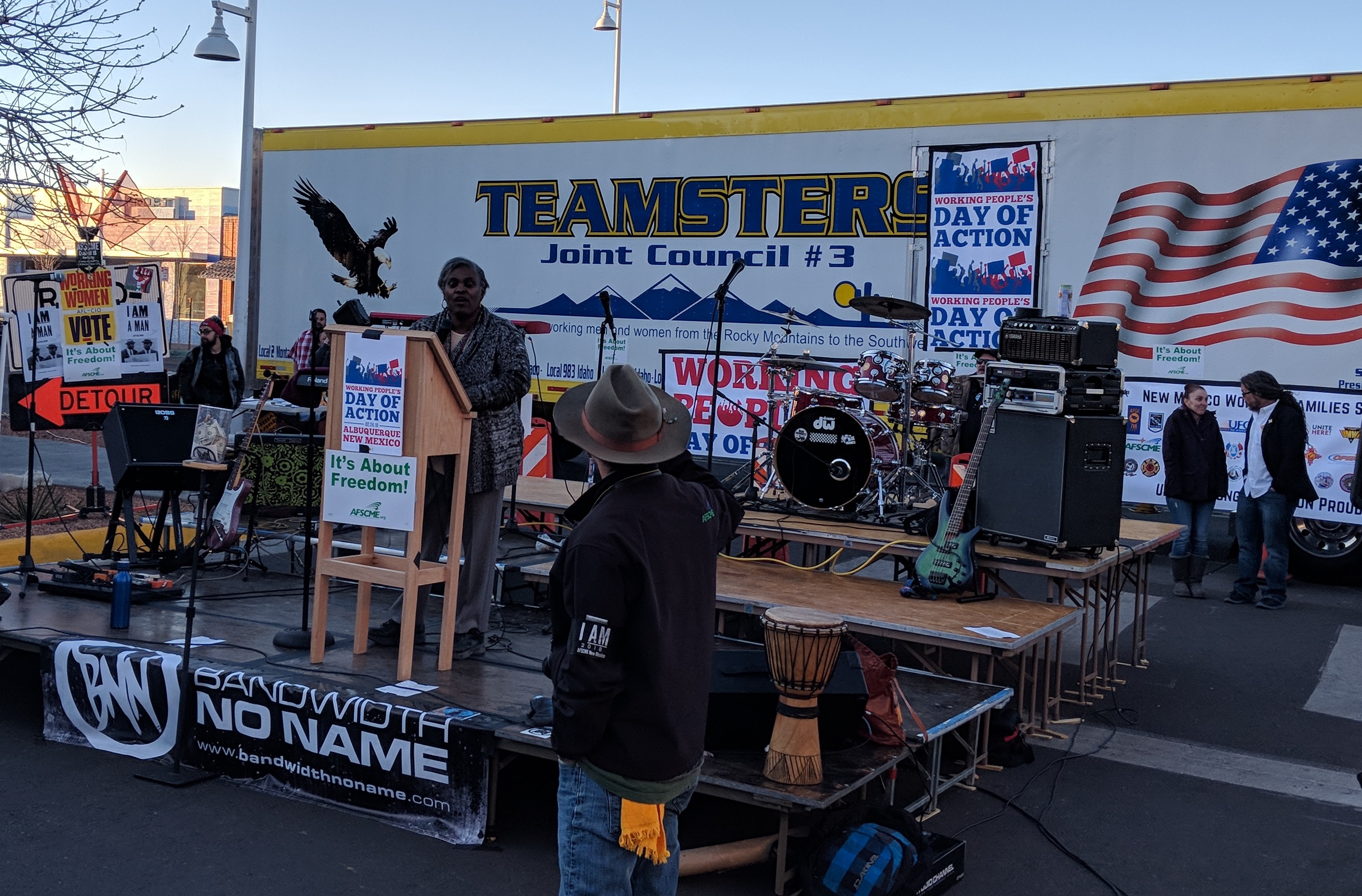
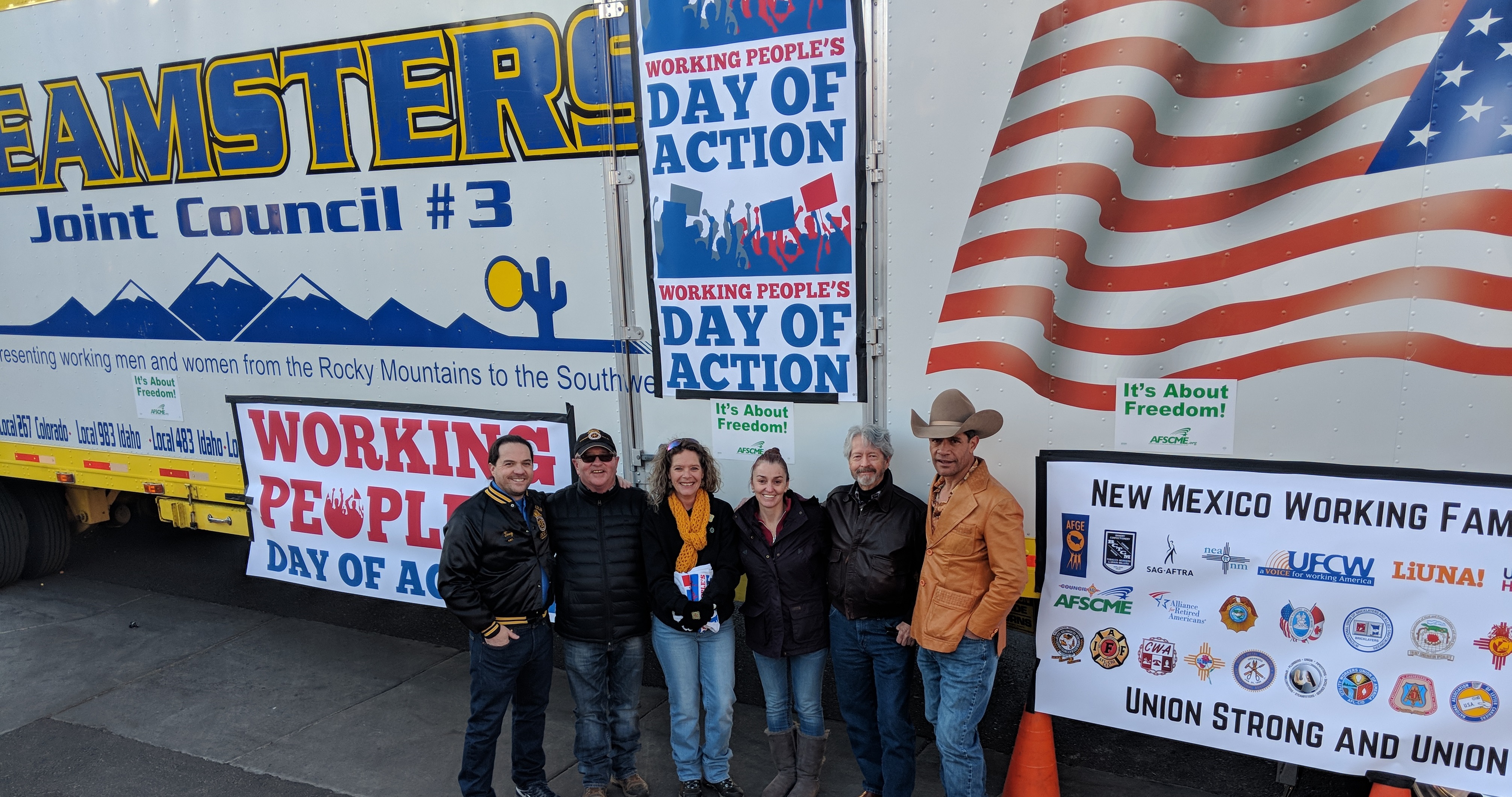
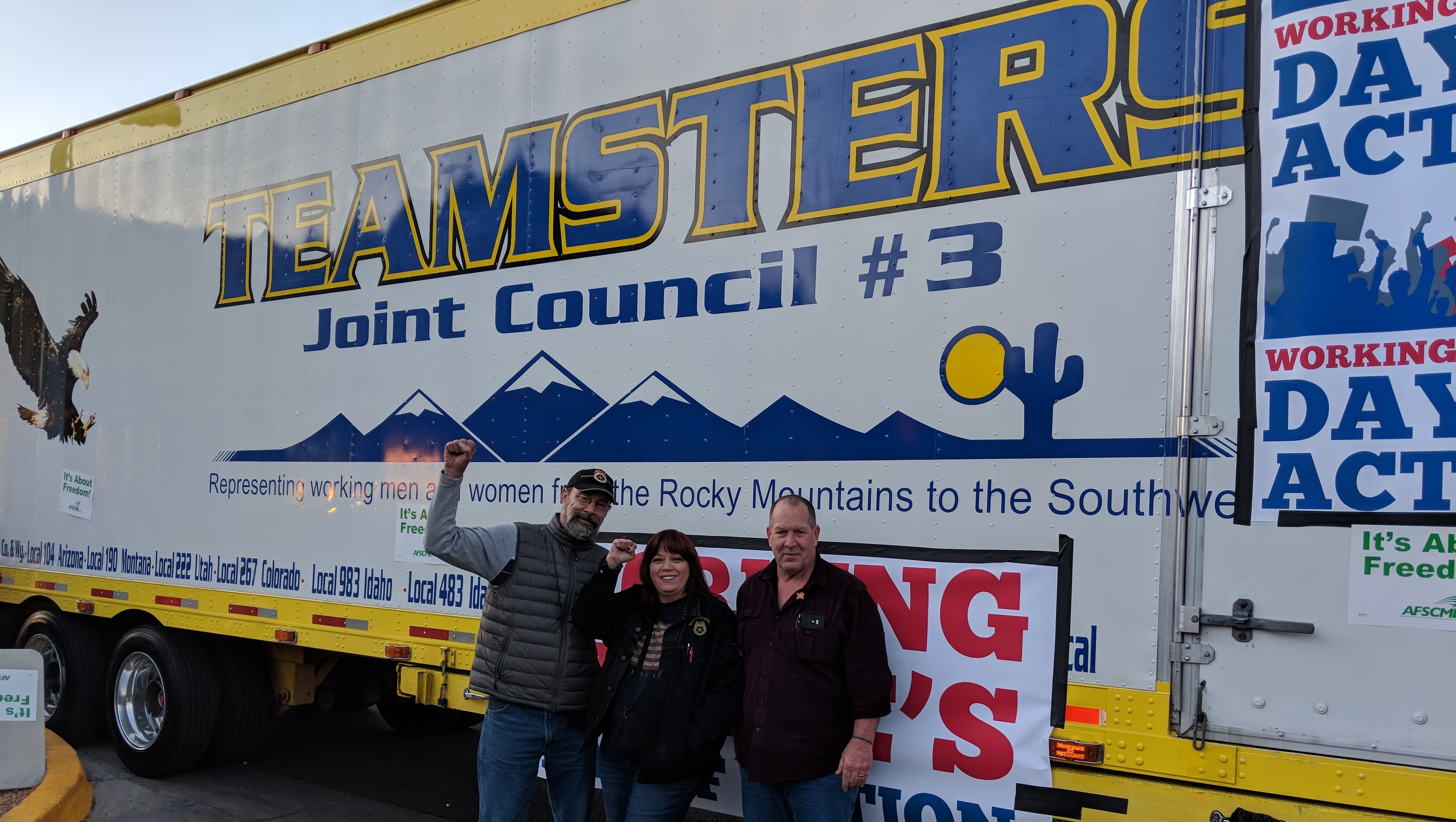
Working People’s Day of Action in Albuquerque
Today Saturday, February 24, New Mexico stood with thousands of working people across America as workers united to demand an end to a system and an economy that’s rigged against the worker. Hundreds showed up at Nob Hill and viewed the Teamster Joint Council #3 Truck as the backdrop for the event.
View Pictures of the event here.
The “Working People’s Day of Action” was about demanding an end to the rigged economy and defending our freedoms to join together and bargain collectively, to fight for decent and equitable pay for our work, affordable health care, quality schools, vibrant communities and a secure future for all of us.
There was live music by “Bandwidth No Name” who performed in front of our Teamsters JC3 Truck. Speakers at the event included the newly elected Mayor of Albuquerque Tim Keller, longtime labor supporter NM State Representative Sheryl Williams Stapleton, and many labor other labor leaders.
Thanks for everyone that showed up!!! A special thanks to Teamsters 492 Business Agent Tracy McCarty for coordinating with the JC#3 to get the Truck down here and for spending his Saturday day off to make sure the truck was there are ready to go for the event.
|
|
|
| |
|
TEAMSTERS MAKE PROGRESS THIS WEEK AT ABF NEGOTIATIONS
This week, the Teamster National Freight Industry Negotiating Committee (TNFINC) and ABF Freight resumed bargaining for a new national collective bargaining agreement and the Union reported progress on some of the issues. The current agreement is set to expire on March 31, 2018.
The parties met in Kansas City and made progress in several areas. For example, progress was made on tightening up language to address concerns about the use of purchased transportation and to improve job security. The union committee also stood firm in its opposition to the company’s controversial drug-testing and fitness-for-duty proposals and, after many spirited meetings, the company ultimately withdrew these proposals. As a result, there will be no changes to Article 35.
Other issues were also addressed including improvements to certain equipment and additional disciplinary protections. TNFINC Co-Chairman and Teamsters National Freight Division Director Ernie Soehl said he was encouraged by the progress.
“Addressing the use of purchased transportation and improving job security are two of the main objectives of the bargaining team,” Soehl said. “We made good progress on some important issues, but tough items, including the major economic issues, remain to be tackled.
“Our committee has done an amazing job of showing solidarity, working hard and is 100-percent committed to achieving our goals and representing the interests of the membership,” Soehl said.
Soehl said he greatly appreciates the support that the membership has shown for the committee in recent weeks. “The committee has received near universal support from the membership, and that is who we are working for,” Soehl said.
Negotiations resume on February 26.
Visit the Teamsters 492 ABF Negotiations Page for all the updates. Visit the new ABF Teamsters Facebook Page
Text "ABF" to 86466 to receive text message alerts (message and data rates may apply). Or visit www.teamster.org and click on the Freight Division page, then click the “ABF Contract Updates” button. The contract updates page is https://teamster.org/abf-contract-update
***If you are a member of Local 492 and not receiving email updates from Local 492, CLICK HERE to sign up or call Trey White at 505-344-1925 ex 15***
|
Download:
abf_update_feb_16_web.pdf
|
|
| |
|
Teamsters Local 492 will be conducting a Forklift Safety Certification Class (1 Day Course) and will also hold separate classes for OSHA 10 (2 Day Course) along with the Haz-Com/GHS (3 hour refresher). Only online registration will be accepted, to register, Click HERE. Members that live in the Northern NM area will be given priority for the Española classes, and all others will be given priority in the Albuquerque classes.
If you only need the Haz-Com/GHS refresher please check the box for only the date you wish to attend the refresher. If you need to take the OSHA 10 Class you will be required to also attend the Haz-Com/GHS refresher. To register, Click HERE (You must login to register and only online registration will be accepted) If you need a login, CLICK HERE. You must be an active 492 member.
Classes for Albuquerque will be held at Teamsters Local 492 Union Hall, 4269 Balloon Park Rd Ne, 87109. The attendees of the Española classes will be notified via email of the specific location. If you have any questions, please contact Trey White at the Local Union office at 344-1925 Ext. 15.
|
|
|
| |
|
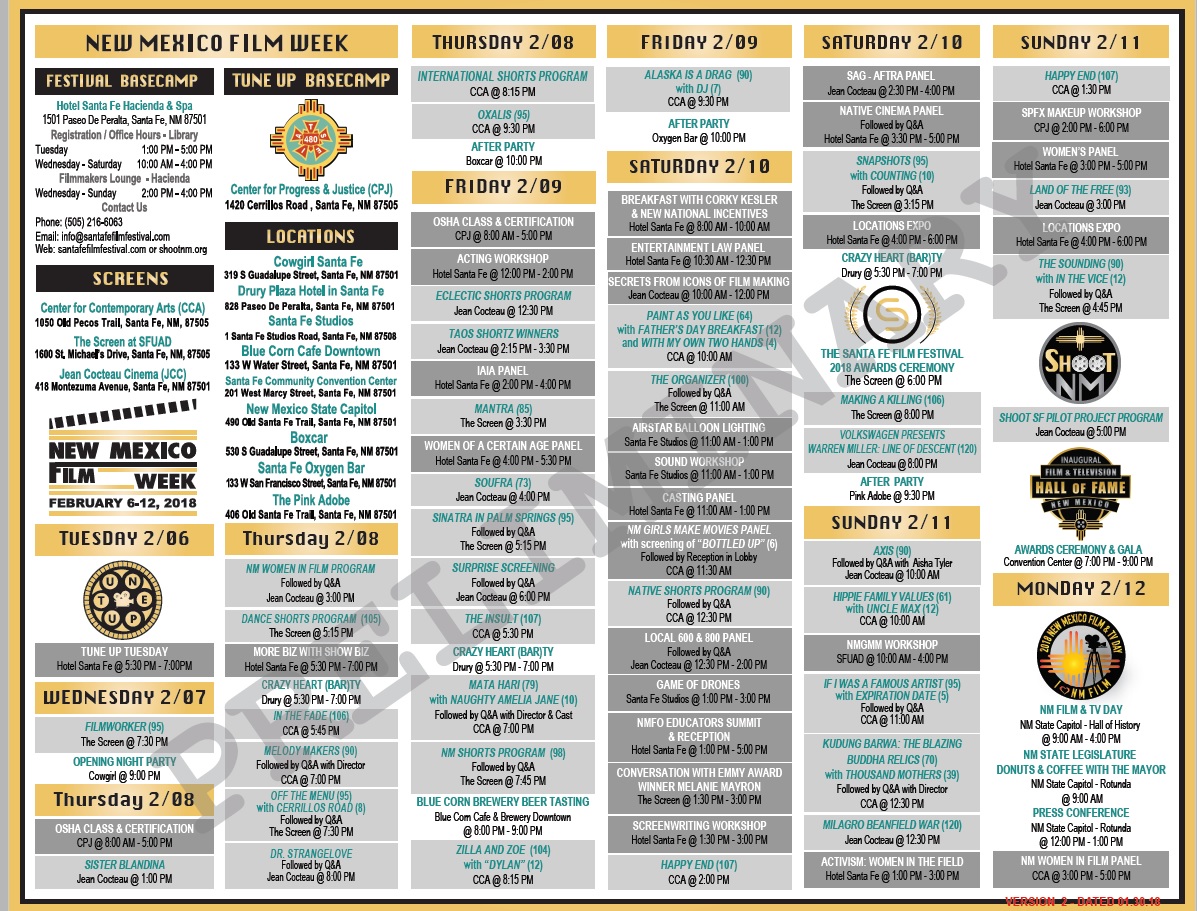
Film Week starts today with the Tune Up Tuesday mixer from 5:30-7 pm at the Hotel Santa Fe. Representative Bill McCamley will be present to discuss the NM House Labor & Economic Development Committee's options around the incentives program.
You can pick up your Film Week and Santa Fe Film Festival passes by registering at the Hotel Santa Fe Library from 1-5 pm tomorrow.
**Film & TV Day at the Roundhouse is a week from today (Monday Feb 12). Teamsters Local 492 will have a table set up. Make sure to come by and say HI.
Take a moment to look up your legislator's so you can plan to stop by their office and thank them for supporting the NM Movie Industry. You can find the entire listing at:
https://www.nmlegis.gov/Members/Find_My_Legislator
|
Download:
2018_Film_week_schedule.pdf
|
|
| |
|
SANTA FE, N.M. (AP) — Democratic state lawmakers want to eliminate New Mexico's annual $50 million cap on film incentive spending but the future of the proposal is unclear amid Republican opposition.
The bill which would eliminate a cap on incentives is moving through the New Mexico House and comes after state officials reported the film and television industry contributed more than a half-billion dollars to New Mexico's economy in 2016. Click Here to read about the record year (2016) for film.
Rep. Antonio "Moe" Maestas, an Albuquerque Democrat and sponsor of the bill, said outside of Los Angeles and New York, the state of New Mexico is one of the top film producers in the country. "It's time to remove the cap and the disincentives that it places on economic development and film production here in New Mexico," Maestas said.
Rep. Bill McCamley, a Las Cruces Democrat, said there was a direct correlation between the money the state spent on incentives and the return it got.
Some critics of the cap fear it could lead productions to pass by New Mexico for other states.
But Rep. Rebecca Dow, a Truth or Consequences Republican, said she sees the tax credit as going to some of the wealthiest people in the world and seemed to be playing favoritism. "I'm trying to understand why a certain industry should be such a winner," she said.
Data from the New Mexico Film Office show film and television productions contributed $505 million to the state's economy in 2016. That included 61 major productions.
A spokeswoman for Martinez said the Republican governor has not reviewed the bill.
New Mexico lawmakers' attempt to remove the state's cap on film incentive comes amid increased competition around the country for film production as streaming services like Netflix and Amazon step up their own projects.
Last year, for example, Louisiana lawmakers voted to continue a $180 million limit on the amount that taxpayers will spend each year on the tax credits doled out to film and TV productions.
An open letter from Teamsters Local 492 to Representative Dow:
Dear Representative Dow,
Our Teamster Members work in the NM film industry as Drivers, Wranglers and Animal Handlers. They are not wealthy, but they make a good wage per hour and also receive medical and retirement benefits which is not always the case with a lot of jobs these days. The NM Film industry is a very large part of the growth seen recently in New Mexico’s economy and if legislators like yourself were to lift the cap, it would put much needed gasoline into the NM economic engine allowing it to accelerate. In 2016 New Mexico’s film industry injected more than a half a billion dollars into the NM economy, which means more jobs and prosperity for our State.
Please support the hard working men & women of the NM film industry by voting to lift the cap.
Thank you,
Teamsters Local 492
Sent to Rep. Dow via email on 1-26-18
|
|
|
| |
|
Teamsters, ABF Address Non-Economic Issues As Negotiations Kick-Off
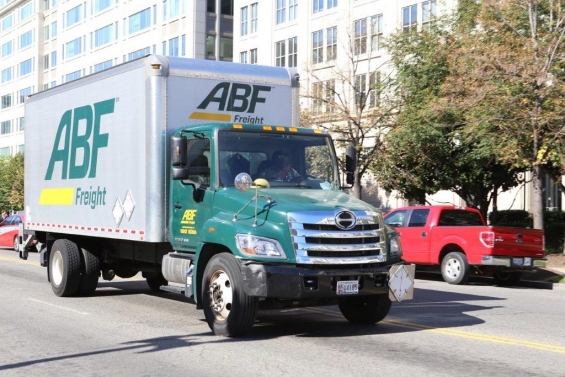
The Teamsters National Freight Industry Negotiating Committee (TNFINC) met with ABF this week to start negotiations for a new ABF National Master Freight Agreement (NMFA) that would take the place of the current agreement which is set to expire on March 31.
The meetings this week focused primarily on language issues but ABF continues to raise claims that its employee and operating costs are too high. TNFINC however, has made clear that the members are not interested in a concessionary contract.
The parties spent this week trying to resolve some of the less controversial issues.
“Rather than get bogged down right off the bat in what could easily result in a collision, we spent this week trying to resolve some of the less controversial issues and made progress in those areas,” said Ernie Soehl, Director of the Teamsters National Freight Division and Co-Chairman of TNFINC.
The parties have tentatively agreed on a number of national language articles, including with regard to: Scope of the Agreement; Recognition; Union Shop and Checkoff; Stewards; Protection of Rights; Loss or Damage; Bonds and Insurance; Uniforms; Passengers; Military Leave; Pay Period; Other Services; Posting; Union Activities; Owner Operators; Separation of Employment; Inspection
Privileges and Employer and Employee Identification; Emergency Reopening; Sympathetic Action; Jurisdictional Disputes; Garnishments; and Non- Discrimination. Most of these tentatively agreed upon articles simply remain unchanged from the current contract but according to Soehl, it made sense to initially “pick the low hanging fruit” and get non-controversial items out of the way.
“We remain committed to getting the best possible agreement for our members,” Soehl said.
The parties will reconvene on January 29 to resume negotiations.
Visit the Teamsters 492 ABF Negotiations Page for all the updates. Visit the new ABF Teamsters Facebook Page
|
|
|
| |
|
Company Exceeded Permissible Amount of Freight That Can Be Diverted
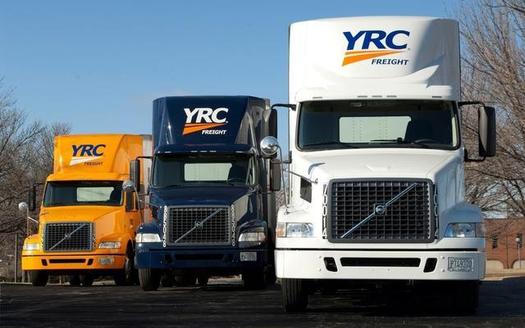
The Teamsters Union has won a $1 million settlement on behalf of YRC Freight’s road drivers.
The collective bargaining agreement with YRC Freight limits the amount of over-the-road freight that can be put on trains or hauled by non-bargaining unit personnel. The Teamsters Union monitors those amounts. After reviewing the situation and convening a meeting of the committee that monitors compliance, it was determined that the company had in fact exceeded the permissible amounts.
“Our YRC members have an agreement that strongly protects bargaining unit work and work opportunities and the company acknowledged that it diverted more freight than what is allowed,” said Ernie Soehl, Director of the Teamsters National Freight Division. “We will always seek to hold employers accountable by making sure they abide by our contracts and agreements.”
After reviewing the records, it was clear that a substantial amount of the diverted freight—carried mostly on rail—was the direct result of extraordinary service and terminal interruptions resulting from hurricanes Harvey and Irma. The committee determined that under the unique circumstances of the matter the company should not be penalized for these “Acts of God.” Nevertheless, the committee determined that the company still exceeded the maximum road miles that could be hauled on rails and ordered it to pay $1,003,930.00.
YRC Freight will be contacting Teamster local unions to review the lists of drivers who are eligible for the payment.
|
|
|
| |
|
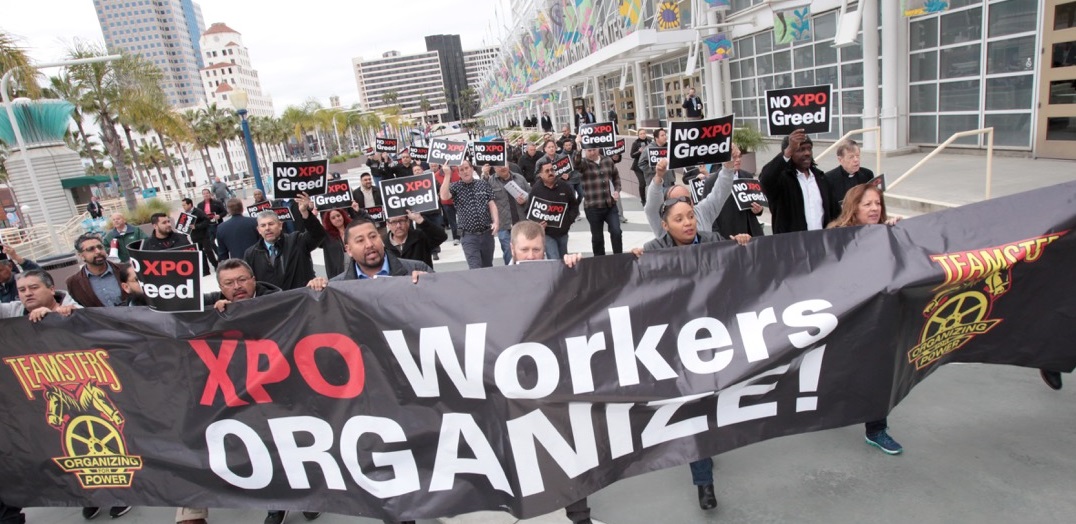
XPO (Con-way) and The Teamsters – History
Written by Teamsters492.org admin Trey White - As some of you may remember, non-union Con-way was created by CF-Consolidated Freightways in 1983. CF shutdown in 2002 while Con-way somehow continued to operate. Now known as XPO, who acquired Con-way in 2015, it has been a rough ride for the workers of this company as the non-union/anti-worker mantra seems to be embedded into the Company regardless of who owns it or what they name it. Recently published info about XPO’s horrible benefit package (really horrible when compared to union carriers ABF & YRC), shows the XPO workers are paying an average of $7556 per year, which does not include the additional out-of-pocket expenses if/when the worker uses the insurance. XPO’s best family insurance is a PPO plan called the “Classic Plan,” which includes very basic vision and dental coverage at extra cost and a possible additional “spouse surcharge”. XPO/Con-way also has no real retirement “plan” as their pension ceased being funded in 2007, XPO currently only has a mainly worker funded 401(k).
For over 3 years now, the Teamsters Union has been actively responding to the calls that have come in from workers at XPO/Con-way across America. The Teamsters have had some organizing successes, but the anti-union Company has been actively fighting their own employee’s wishes to bargain as a collective voice. You may have read about a dozen or so of these battles, but there is way more of a fight going on than you may be aware of.
Con-way/XPO will not agree to Card Check Neutrality, but instead has taken the low road by doing everything they can, including spending tons of money to hire “union busters” and tying up the election and bargaining process in court. It seems XPO/Con-way would prefer to waste its money on lawyers and union busters rather than spend that same money on improving the lives and working conditions of its own employees, who they could not operate profitably without. XPO does not want their employees to have a collective voice or allow them to choose a representative who has their best interests at the bargaining table. You decide for yourself, here are some examples of their behavior:
There have been dozens of locations that have had workers/Unions file various petitions and/or charges with NLRB involving XPO/Con-way because the workers are tired of the way the company is treating them when they show interest in becoming Teamsters. In fact, an administrative law judge with the National Labor Relations Board (NLRB) ruled Con-way Freight violated the rights of workers who were trying to form their Union with the Teamsters and required the company to re-hire two workers it unlawfully fired during an organizing campaign with full back pay, among other remedies. Administrative Judge Eleanor Laws wrote in her decision, “By instructing employees not to wear Union insignia, threatening employees for supporting the Union, filing criminal charges against an employee, suspending employees, and terminating employees because they supported the Union, the Respondent has engaged in unfair labor practices…”
In September of 2015, XPO Logistics purchased Con-way Freight for $3 Billion. Over the last 3 years, the XPO/Con-way freight workers have been fighting for their right to collectively bargain. The brave workers have survived a huge Anti-Union battle being waged against them as they simply try to improve their workplace by having a collective voice. These workers voted for Teamster representation at terminals in Miami; North Haven, Conn.; and Philadelphia, Los Angeles; Laredo, Texas; Aurora, Illinois; and Trenton, NJ, but there is still not a single CBA in any of those 7 locations, even though multiple NLRB charges have been won by the Teamsters mandating XPO recognize the Teamsters as the bargaining agent and negotiate a contract. The Company has waged negotiating stall tactics including protesting the elections resulting in Teamster representation, but in September of 2016, The 5th Circuit Court of Appeals rejected XPO Logistics’ bid to throw out a Union representation vote at Laredo, Texas, during 2014, and again in December 2016 and again by the Supreme Court in July of 2017 and has again ordered the company to negotiate in good faith with the Teamsters.
Unfortunately, the anti-Union company has also been able to intimidate enough workers at many locations that the Teamsters have had to withdrawal election petitions and in some cases have lost some elections, many by a very small margin.
Soon after Teamster organizing got under way at Con-way, in another effort to slow the organizing progress, Con-way announced it would increase truck driver pay 6% (spending about $60 million) starting Jan 4th, 2015, and make other improvements. “It seems more than mere coincidence that these two companies (Con-way and FedEx Freight) have announced significant pay increases just as hundreds of workers across the U.S. are approaching our local Unions seeking representation,” Tyson Johnson said. “The unfulfilled promises that have been made to drivers and dockworkers over the past decade are coming back to haunt management. Workers now realize the only way to achieve meaningful change in the workplace is to get it in writing in a binding contract.”
To continue reading more about the Con-way/XPO Logistics Teamster efforts and the history of XPO/Con-way’s blatant union busting/law breaking campaign, Click Here.
|
|
|
|